
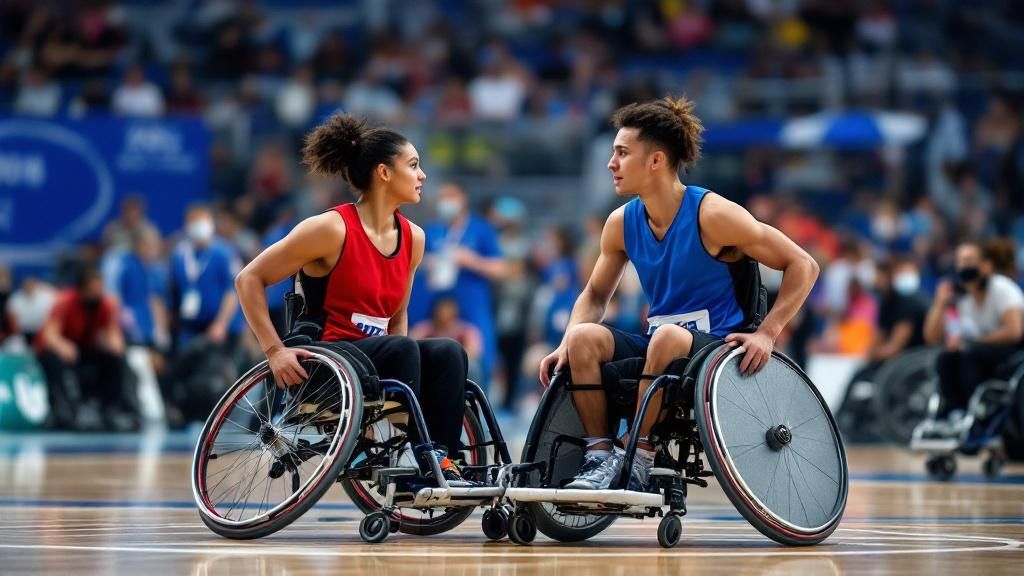
Wheelchair basketball athletes have captivated audiences worldwide by displaying exceptional athletic prowess and technical excellence at the esteemed International Championship. These remarkable competitors have established that disability poses no obstacle to professional-level performance, delivering stunning displays that match any major league competition. From lightning-quick ball handling to remarkable slam dunk displays, participants have challenged preconceptions whilst competing at the highest level. This article examines the memorable highlights, outstanding accomplishments, and uplifting tales that shaped this landmark event in adaptive sports.
Exceptional Performances Showcase Elite Talent
The International Championship witnessed an remarkable exhibition of athletic prowess as wheelchair basketball athletes demonstrated the finest standard of ability and resolve. Athletes executed complex defensive strategies with impressive accuracy, whilst their offensive plays showcased exceptional spatial awareness and technical mastery. The intensity of competition proved that these top-tier athletes compete at a standard equivalent to mainstream professional basketball, captivating spectators with their dynamic athleticism, strategic brilliance, and unwavering commitment to success across the competition.
Multiple impressive performances captured the imagination of audiences and commentators alike, with competitors showcasing striking demonstrations of shooting accuracy and handling skills. One especially notable match showcased a player performing a sequence of three-point shots with striking accuracy, demonstrating the polished technical capabilities developed through years of focused preparation and competition. These instances of exceptional performance contributed significantly to the overall spectacle, highlighting the range of abilities that wheelchair basketball athletes demonstrate and their capability to excel under high pressure at championship level.
The tournament also highlighted outstanding team coordination, with well-orchestrated movements and smooth passing patterns exemplifying the sophisticated tactical approaches utilised by competing nations. Coaches demonstrated impressive tactical creativity, deploying intricate tactical setups and movement sequences that maintained spectator interest. The coordination among players, combined with swift wheelchair agility, created a dynamic sporting experience that transcended traditional basketball conventions and redefined expectations concerning adaptive athletic performance.
Record-breaking achievements emerged throughout the championship, with several athletes surpassing previous statistical benchmarks in scoring, assists, and defensive contributions. These achievements underscore the continuous evolution of wheelchair basketball as athletes push physical and technical boundaries, setting fresh benchmarks for excellence. The pursuit of these records motivated athletes to produce sustained high-quality displays, elevating the standard of competition and motivating upcoming players of wheelchair basketball participants worldwide.
The championship’s triumph ultimately showcased the devotion, strength, and outstanding skill of wheelchair basketball players who keep pushing forward with adaptive sports on the international stage. Their performances went beyond sporting achievement, conveying powerful messages about human capability and capability. By showcasing exceptional talent and consistent commitment, these outstanding athletes have solidified wheelchair basketball’s position as a top disability sport deserving international acknowledgement and recognition.
Technical Excellence and Tactical Play
The International Championship showcased wheelchair basketball athletes performing advanced attacking tactics with exceptional accuracy. Players demonstrated outstanding dribbling skills, implementing complex pick-and-roll plays and quick successive passes that broke down opposing defensive structures. Their court awareness and positioning proved extraordinary, with competitors utilising advanced tactical movements to create scoring opportunities. The level of technical proficiency shown matched top-level conventional basketball, highlighting the sport’s tactical complexity and demanding skill requirements.
Defensive Excellence and Control of the Court
Defensive displays across the tournament exemplified elite-level intensity and strategic skill. Athletes deployed intense full-court pressing tactics whilst maintaining disciplined positional awareness. Their capacity to predict opponent actions, alongside rapid wheelchair manoeuvrability, created imposing defensive structures. Teams exhibited advanced zone defences and man-to-man coverage systems, successfully neutralising opposing attacks and generating key turnovers throughout intense periods.
Court command emerged as a key feature of title-winning teams. Athletes kept control through strategic passing patterns and astute passing patterns. Their grasp of spacing, timing, and floor positioning demonstrated basketball intelligence matching professional competitions. Wheelchair mobility combined with tactical awareness allowed teams to control pace of play, control the flow, and assert tactical superiority throughout matches.
- Aggressive full-court pressing produced instant defensive intensity regularly.
- Quick wheelchair mobility facilitated strong transition defence execution.
- Sophisticated zone defences countered opposing offensive strategies effectively.
- Anticipatory positioning generated critical turnovers at vital moments.
- Structured team defence upheld structural integrity across competitions.
Effects on the Game and Outlook Ahead
The International Championship has significantly enhanced wheelchair basketball’s prominence on the worldwide sports landscape. Media coverage has expanded significantly, securing funding from multinational brands and expanded broadcast reach across numerous regions. This heightened visibility has inspired younger athletes to take up wheelchair basketball professionally, strengthening development programmes and community programmes worldwide. Regulatory organisations now acknowledge the business and cultural significance of disability sports, pledging substantial investments in training venues, coaching staff, and athlete services for sustained growth.
Looking ahead, the sport confronts exceptional prospects for growth and development. Technological advancements in wheelchair design continue enhancing performance capabilities, whilst rule modifications aim to increase competitive balance and viewer engagement. Global governing bodies are creating more defined routes for athletes progressing from amateur to elite level. Furthermore, enhanced Paralympic prominence promises broader societal embrace and commercial partnerships. These developments suggest wheelchair basketball will continue flourishing, ultimately transforming perceptions of disability in sport and motivating people worldwide.
