
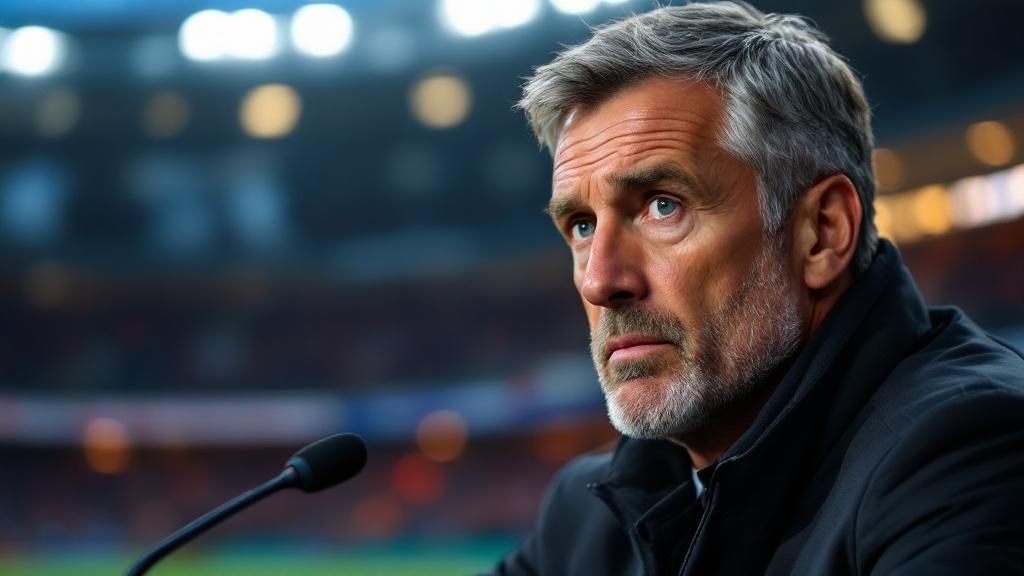
Bosnia-Herzegovina boss Sergei Barbarez has declined to say sorry for his controversial accusations against Brondby’s Welsh boss Steve Cooper in advance of Thursday’s World Cup play-off showdown in Cardiff. The Bosnian manager had alleged Cooper left out midfielder Benjamin Tahirovic from the Danish team due to the Wales qualifier, a accusation Brondby officials firmly rejected. Whilst Tahirovic has subsequently reached out to Cooper to apologise for the row, Barbarez held his ground on Wednesday, maintaining he had no cause to say sorry. Instead, the former Bosnia striker claimed his contentious comments were a deliberate tactic to shield his young player from scrutiny and shift public attention away from the 23-year-old former Roma and Ajax star.
The Row That Persisted
The dispute surrounding Tahirovic’s absence from Brondby’s squad had threatened to overshadowing readiness ahead of one of the most significant matches in recent Bosnian football history. Rather than allowing the story to fade, Barbarez doubled down on his stance, framing the whole affair as a deliberate strategy to protect a gifted player from mounting scrutiny. His willingness to take criticism and redirect it away from Tahirovic showed a manager willing to take the heat himself, even if it involved courting further scrutiny and debate in the final days before the playoff.
Brondby’s communications director Soren Hanghoj quickly acted to dismiss Barbarez’s allegations, characterising Tahirovic’s absence as purely a club decision unrelated to international commitments. The Danish club’s notable comment that “there are not that many Wales fans in Brondby” brought an element of wry humour to the increasingly surreal subplot. Wales boss Craig Bellamy appeared content to let the matter rest, having not spoken to Cooper since the latter’s appointment in September 2025, thereby avoiding the entire controversy.
- Barbarez made news to shield Tahirovic from public examination
- Brondby rejected claims of dropping the central midfielder for international commitments
- Tahirovic apologised to Cooper about the dispute
- Bellamy chose not to engage with the secondary issue
A Strategic Diversion or Genuine Anxiety
Barbarez’s Account
Barbarez’s refusal to apologise came paired with a comprehensive account of his motives, which he portrayed as protective rather than provocative. The Bosnia-Herzegovina manager argued that his controversial accusations were purposefully designed to protect Tahirovic from unwanted attention during a crucial phase in the player’s career. By directing media scrutiny towards himself and the dropping row, Barbarez argued he had successfully created what he termed “a puzzle” for the press to decipher, thereby shifting attention from the young midfielder’s performance and mindset ahead of such a crucial fixture.
Speaking on Wednesday, Barbarez emphasised his faith in Tahirovic’s skills and his two-year familiarity with the player’s capabilities. He noted that shielding his players from external pressure constituted a key aspect of his management style, particularly for emerging talents still advancing their careers at the top level. Rather than viewing his comments as incendiary, Barbarez framed them as a strategic manoeuvre meant to manage the psychological environment around his squad in the closing stages for Thursday’s encounter.
Brondby’s Answer
Brondby’s communications director Soren Hanghoj swiftly countered Barbarez’s narrative with a outright denial of the claims. The Danish club’s statement emphasised that Tahirovic’s exclusion from the team represented solely an internal matter, entirely disconnected from any regard for international commitments or fixtures. Hanghoj’s reply remained carefully balanced but resolute, leaving no ambiguity about Brondby’s position whilst simultaneously injecting a degree of levity into proceedings with a jest concerning the absence of Welsh supporters among the club’s supporters.
The club’s commitment to handling the matter openly, combined with their clear demarcation between domestic versus international football, successfully prevented further debate from their viewpoint. By presenting the decision as ordinary administrative matter rather than a reaction to outside influence, Brondby tried to normalise Tahirovic’s absence and stop it becoming a disruption for either the player in question or the national team’s setup. Their response indicated a professional organisation keen to move beyond the controversy and concentrate attention where it belonged: on the playing surface.
Bosnia’s Route to World Cup Success
Bosnia-Herzegovina’s path to the 2026 World Cup has been arduous, with the nation presently sitting at 71st in the global rankings. Their chances of making a first World Cup since 2014 now depend completely on Thursday’s qualification tie in Cardiff. The Bosnians narrowly missed automatic qualification for the tournament, ultimately beaten by Austria in their final group match when they let in a late goal in Vienna. This setback has put them in a difficult spot where failure to win against the Welsh side would mark the end of their World Cup ambitions for this cycle.
Barbarez’s squad enters the contest with meticulous preparation, having spent three days reviewing lessons from their Austrian loss and formulating contingency plans for every conceivable scenario. The manager has highlighted his optimism regarding the encounter, noting that these knockout encounters of this magnitude represent the pinnacle of international football. Should Bosnia secure victory from the Cardiff encounter, they will secure a home final against either Italy or Northern Ireland on 31 March, providing them with one final opportunity to claim their place on the grandest stage of football.
| Team | Current Status |
|---|---|
| Bosnia-Herzegovina | Play-off semi-final against Wales |
| Wales | Play-off semi-final against Bosnia-Herzegovina |
| Italy | Play-off semi-final against Northern Ireland |
| Northern Ireland | Play-off semi-final against Italy |
- Bosnia sits 71st globally, pursuing maiden World Cup appearance from 2014.
- Winners meet Italy or Northern Ireland in home final on 31 March.
- Barbarez’s team has put in place contingency plans for penalties and extra time scenarios.
Experience and Ambition Converge in Wales
Wales will present a stern test for Bosnia-Herzegovina on Thursday night, with Bellamy’s team nurturing their own World Cup ambitions. The Welsh have put together a competitive outfit determined to upset the odds and progress to the final qualifying round. Bellamy, who took charge of the national team earlier this year, has instilled a sense of purpose and tactical discipline into the squad. The Cardiff stadium will provide an electric atmosphere, with Welsh fans creating an hostile setting for the Bosnian visitors. Both teams understand the magnitude of the occasion, with only a single team able to progress towards the 2026 World Cup in North America.
The rigour of knockout football calls for not merely technical proficiency but also mental fortitude and composure. Barbarez’s Bosnia side have demonstrated their ability to compete at the top tier, though their ranking of 71st globally points to they remain outsiders in this match. Wales, by contrast, will find confidence from their home soil edge and the passionate support of their supporters. The difference between the two nations’ recent trajectories creates a compelling narrative, with Bosnia chasing redemption following their narrow Austrian defeat, whilst Wales seek their own goals on the global arena. Thursday’s match will offer a thrilling display of European football at its most consequential.
Key Players and Strategic Planning
Benjamin Tahirovic, the 23-year-old midfielder at the heart of the current dispute, represents one of Bosnia’s most talented and creative talents. His experience at Roma and Ajax has furnished him with the technical acuity and composure needed for such demanding fixtures. Barbarez has meticulously prepared his tactical strategy, putting in place backup strategies encompassing extra-time and penalty situations. The manager’s strategic foresight reflects a comprehensive understanding of knockout football’s unpredictability, ensuring his squad remains psychologically ready for any eventuality that may unfold during the ninety minutes and afterwards.
